Posts

Five Ways That Waste Management Services Can Help Your Business
Image
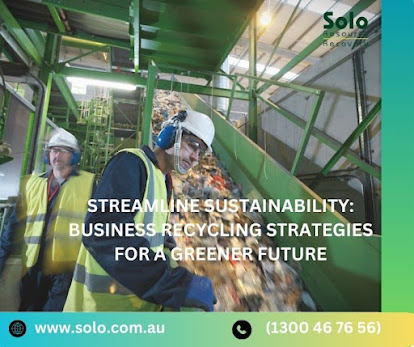
  In today's competitive business landscape efficiency and sustainability are paramount, and every aspect of your operations, from procurement to disposal, requires careful consideration. This includes business waste management , and while it might not be at the top of your things to do list, partnering with a reputable waste management company can offer significant benefits. Following are five ways that waste management services can benefit your business: 1. Cost Reduction and Improved Efficiency Waste disposal fees can be a hidden drain on your company's finances, and a waste management service provider like Solo can help you optimise your waste streams, leading to significant cost savings. Here's how: Waste Audit and Streamlining: Reputable waste management companies offer waste audits, and these audits analyse your waste composition, identifying opportunities to reduce, reuse, or recycle materials. This can lead to a reduction in the amount of general waste you s...
A Guide to Bulk Waste Collection In Australia

Image
 Do you feel like your business is slowly being swallowed by a sea of unwanted items?  Perhaps you're renovating and have old cabinets that need to be disposed of, or maybe your business is upgrading its office furniture. Bulky waste can accumulate quickly, creating an eyesore and hindering functionality. This is where bulk waste collection services come in – your key allies in conquering clutter and reclaiming your space. What is Bulk Waste Collection? Bulk waste collection is a service offered by many Australian councils and waste management businesses like Solo. It allows residents and businesses to dispose of large items that cannot be placed in their regular bins. These items typically include: ·         Furniture (sofas, chairs, tables, bookcases etc.) ·         Whitegoods (fridges, washing machines, dryers etc.) ·         Electronics (computers, televisions, ...

Construction Waste Disposal and Responsible Construction Waste Management

Image
Australia's construction industry is a key driver of economic growth, and it is also a substantial contributor to the nation's waste footprint, with construction and demolition activities accounting for around 38% of the total waste generated in the country. As such, the proper disposal of construction waste has become a critical issue for environmental sustainability and community well-being, and this article looks at the challenges associated with construction waste, underscoring the significance of responsible construction waste management, and explores sustainable practices within the Australian context. The Challenge of Construction Waste The construction industry in Australia is of great economic and social importance, fuelling development and providing essential infrastructure. However, this sector simultaneously generates a vast amount of waste, comprising of materials such as concrete, wood, metal, plastics, and more, and statistics indicate that the construction and...

Grease Trap Waste Management - Best Practices For Commercial Kitchens

Image
  In the busy world of Australian commercial kitchens, the effective management of grease trap waste is of upmost importance, and this article outlines the best practices that kitchens can apply to grease trap waste and its management, with an emphasis on the importance of maintaining hygiene standards along with operational efficiency. From understanding what grease trap waste is, to how it should be handled, and how it should be disposed of, each part of the process plays a vital role in maintaining a functional grease trap that complies with best waste management practices. Understanding Grease Trap Waste Grease trap waste, which is a blend of fats, oils, grease (FOG), and food solids, pose a persistent challenge to commercial kitchen operations, because as these substances accumulate within the grease trap, the risks of blockages, foul odours, and environmental harm become imminent. Consequently, adopting best practices in grease trap waste management is crucial for the ope...

Beyond Bin Collection: How A Waste Management Company Can Benefit Your Business

Image
In the dynamic landscape of modern business, cost efficiency and sustainability are pivotal for companies that are aiming to thrive, and one area where businesses can significantly cut costs while enhancing their environmental credentials is through the engagement of a professional waste management company such as Solo . Beyond routine rubbish bin collection, we offer solutions that streamline commercial rubbish removal and waste disposal services which will also bring significant cost savings to a business. The Cost Of Neglecting Waste Management For some businesses, the disposal of waste is perceived as a standard task, with little attention paid to the potential financial implications. In reality, neglecting efficient waste management practices can lead to a range of hidden costs. Overflowing bins, inefficient waste sorting, and inadequate disposal methods not only harm the environment but can also result in regulatory fines, increased operational expenses, and reputational d...

Grease Trap Waste Management: Best Practices for Commercial Kitchens

Image
In the busy world of Australian commercial kitchens, the effective management of grease trap waste is of upmost importance, and this article outlines the best practices that kitchens can apply to grease trap waste and its management, with an emphasis on the importance of maintaining hygiene standards along with operational efficiency. From understanding what grease trap waste is, to how it should be handled, and how it should be disposed of, each part of the process plays a vital role in maintaining a functional grease trap that complies with best waste management practices. Understanding Grease Trap Waste Grease trap waste, which is a blend of fats, oils, grease (FOG), and food solids, pose a persistent challenge to commercial kitchen operations, because as these substances accumulate within the grease trap, the risks of blockages, foul odours, and environmental harm become imminent. Consequently, adopting best practices in grease trap waste management is crucial for the operation...

State-of-the-art liquid waste disposal solutions for all types of liquid waste types

Image
Liquid waste disposal is inevitable if you are in certain types of businesses, like manufacturing, chemicals, textiles, oil and gas, pharmaceuticals, and paper. However, in addition to industrial wastewater, liquid waste can also be generated by other means, like sanitary sewage, storm sewage, and mixed sewage. Wastewater and liquid waste are released from residential sources in the form of wastewater or "black water," which can have a high amount of pollutants, solvents, pesticides, and wash water. Liquid waste from industrial and commercial establishments has the potential to negatively impact public health, plant and marine life, and the local economy as well.   There are also increasing concerns over the liquid waste generated by households, known as grey water, which mostly contains wash water from kitchens and bathrooms. Liquid waste also poses serious problems by contaminating surface water and groundwater. As such, appropriate liquid waste disposal is critical to p...